Sunday, September 28, 2014

2 URBAN FARMS

This weekend as part of a Richmond Farm Tour I visited 2 local urban farms in this area. The link to the farm tour is below:

http://vabf.org/vabf-richmond-farm-tours/

The two farms were both unique in there own way but at the same time both were equally dedicated to providing locally sourced food and food education to the surrounding community. I was struck by how each and every person I met was dedicated and seemed excited about what they were doing. I believe every city need farms like these that are committed to help the surrounding community by providing produce to people and places that otherwise may not have it. 

The first farm I visited was The Jerusalem Connection Garden, which is associated with Renew Richmond, a program dedicated to creating Urban farms and gardens in Richmond. When we first arrived we pulled into what appeared to be a parking lot right off the main road. I was thinking that the GPS had to be wrong. It turns out it was not. The Jerusalem connection Garden it located on less than an acre of land truly in the center of an Urban area.

The Farm

Shortly after signing in and dealing with all the formalities of the farm tour we started to look around. The garden was very impressive for such a small space. We found out later that all the space was not used as effectively as it could be because the the main goal of this farm was education and outreach. But still, take a look at this picture, the farm seemed pretty productive to me!


About 5 minutes after we arrived the farmer, who also happened to be the tour guide, showed up. One of the first thing he explained to us was their mission as an urban farm. It is to educate the population living around them. This seemed like a big mission for a one acre farm, it seemed like an even bigger mission when I found out this farm was totally volunteer run. This blew my mind. In order to look that good the farm must have had a lot of willing, dedicated and talented volunteers. He went on to tell us that they also provide produce for pop up markets at 2 churches and the health department.

The farm, as I mentioned, was not big. They only produce 3,000 pounds of produce a year, while this may not be feeding a ton of people it is raising awareness in the community. They often reach out to schools, church groups and other groups of people who would benefit from there mission. A lot of the people benefiting from this Garden would not otherwise have access to fresh food.  They donate produce to local churches, who in turn prepare meals that can be frozen and given to families in need.

Another way Jerusalem Connection Garden makes sure it is really serving the community is they raise what  the people want. Instead of growing crazy unheard of vegetables and trying to introduce them to people who have not even had a carrot before they grow what people will actually eat and enjoy.  Instead they grew things like strawberries, tomatoes, squash melons, carrots and apples. 
Melon


Tomatoes

Apple, Pear and Peach trees-a new garden of fruit trees.

Strawberries 

Tomatoes 

Tomatoes
Another thing they talked about was if  Urban farms are supposed to help sustain a certain group of people it does not work to only provide them with food in the summer. Food is a necessity in the winter as well. One of the things this urban farm had were metal structures that were covered with a thick plastic called hoop houses. The plastic captured the heat and did not let it out! When you walk in it is like walking into a sauna. Because of its temperature even in the coldest month of the winter it is still suitable for growing. When we visited the farm they were growing seeds for this years fall and winter plants in the hoop house.

Hoop house
Purple carrot seeds in the hoop house


They also focus on more than just the food. They focus on the entire Eco-system of a garden. They have a rain garden leading back into the apple orchard.
Rain Garden 
Because the farm is on the middle of the city they need to do things that other farms may not need to do. One of these things is having a bee hive. The bee hive means there are always bee in the garden pollinating the flowers.  Urban settings are an important habitat for bees.  Here is a link to some information regarding urban bees:  http://www.bbc.com/news/science-environment-28888218

They also have a section of flowers that attract butterflies. Butterflies and bees contribute to the urban ecosystem and improve the functioning of the gardens.


Raised beds are a common solution used by urban farmers in order to have optimal growing conditions. This may seem like a waste of wood, soil etc, but in fact when gardening in the middle of the city the soil often contain arsenic and other poisons. Gardening in a raised bed allows the soil you plant in to be totally separate from the unsuitable soil beneath you. This is not true in all cases but because this farm is located right next to a parking lot ( providing a smooth clean path for runoff) it is essential to take this precaution. 

Overall this farm really amazed me. Only a few volunteers have been able to do something that really benefits the community. They have created an entire farm system in the middle of a parking lot. They are educating many people and providing healthy and local foods to the community. I highly encourage, if anyone has some free time to go and volunteer, this is a really important thing and we do not have enough people helping out.


The second Urban farm I visited this weekend was Tricycle Gardens. There name is directly related to Urban Farming. The name comes from a story. One day, when Tricycle Gardens was first beginning, they were digging in the soil and they found the pieces of a tricycle in one of the soon to be raised beds.  Because you are gardening in urban soil you never know what you might find buried underneath the layers of soil. There might have been a building, dump or park there before. You never know.


When we got there, Claire, one of the employees gave us a tour of the garden. The garden is located on a hill so they have two levels of the garden which they call the upstairs and downstairs. The upstairs is a more recent addition to the farm. Last year, only counting what was produced in the downstairs, they grew 20,000 pounds of produce, This year with the addition of the upstairs they hope to make at least double that. Like The Jerusalem Connection garden, they care a lot about education and outreach in the Richmond community.

Tricycle Gardens has used a similar technique to what  Jerusalem Connection uses. They created hoop houses (like green houses) so they can still produce food in the winter. Last winter, as we all know, was really really snowy and unfortunately their hoop houses did not hold up. The temperature inside was not suitable for growing. They contacted a farmer in Maine who farmed during the winter (I did not know that was possible). He suggested they use a double layer of plastic. We need to wait for this winter to see if it works!
Uncovered hoop houses 
I noticed Tricyle Gardens used every bit of space.. When we looked around the downstairs of the farm there were pumpkin vines creeping around on most every surface and the end of the summer crops and the beginning of the falls one occupied almost every bed. There were a couple beds that were not occupied but were about to be planted. Clare mentioned that this year they had decided not to till these beds. They thought that tilling it would mix up the natural soil layers. This made perfect sense to me but I later found out it was only possible because they were farming on such a small scale. In order for the plants to be healthy you must mix up the soil a little bit. They can do this by hand at Tricycle gardens but I don't think it would work on an 100 acre farm. 

Along the edge of the garden downstairs there were lots and lots of compost bins. Claire mentioned that they used red wiggler worms in the compost.  Because city soil is not always the healthiest compost is essential for the growth of plants, but this is not the only reason they have compost bins. They are a wonderful way to recycle all the food scraps and more obviously compost is good for all plants not just city plants. 
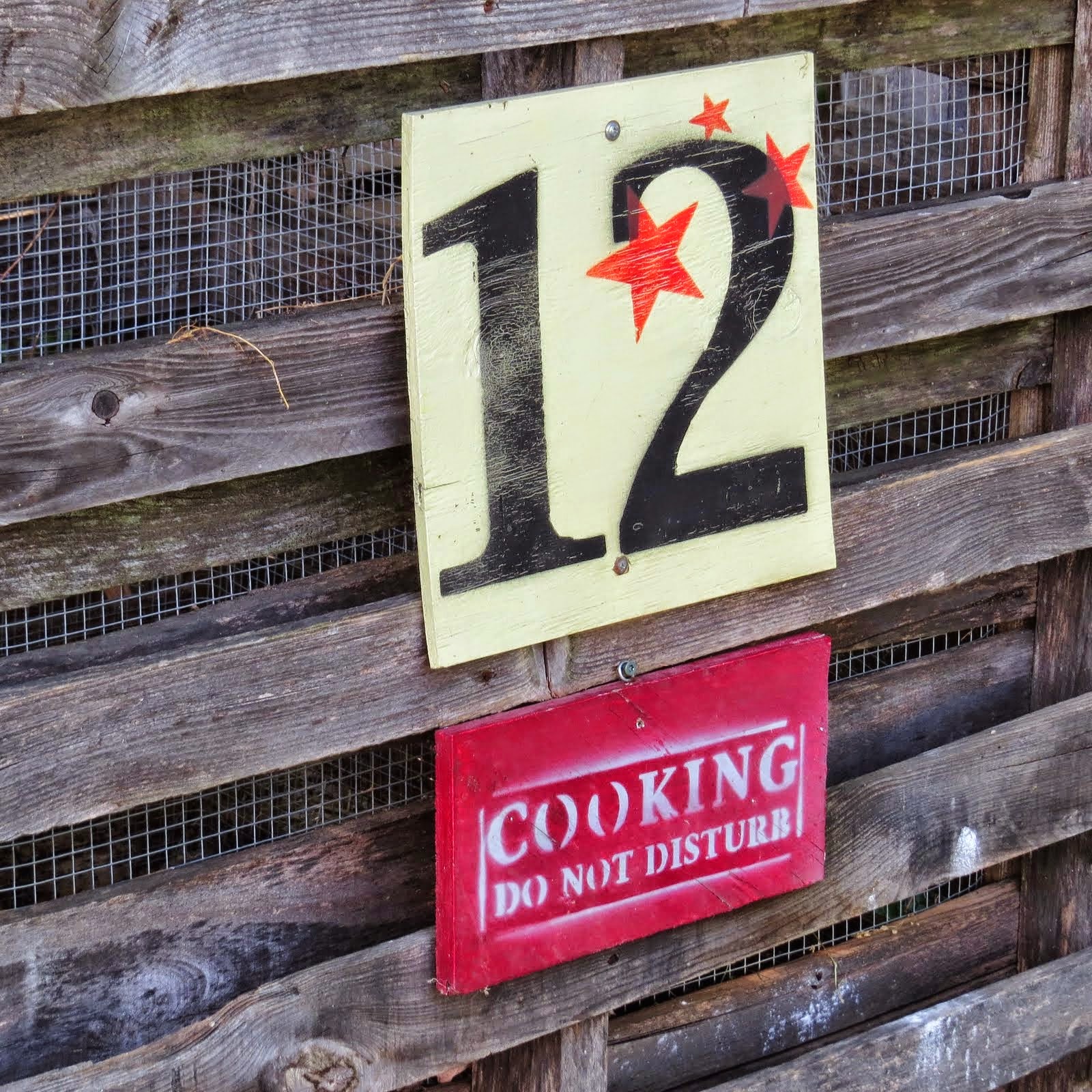
Funny sign on compost bin!

Compost bins

We then headed up to the upstairs part of the farm. This was a recent addition. The upstairs used all raised beds and had a greenhouse and a new hoop house. Earlier that weekend they had a volunteer day and had tidied it up and put wood chips in between the beds. The upstairs looked like it had more crops growing at the moment. They had okra, delicious tomatoes, eggplant, Malabar spinach (spinach on a vine) and many other vegetables, fruits and flowers. Below are some pictures of the abundant produce (and cool bugs!).

BIG spider between two raised beds


Okra


Look at all the produce!

Malabar Spinach

I noticed how well watered and healthy these plants looked. Claire informed us that this might be because they water all there plants from below. They have little plastic tubes that go down to the roots of the plant and they poor the water into the tubes and it water the plants from below. Not only does this cut down on the amount of water wasted but it  means the water does not get on the leaves of the plant and promote burning or roting. 

We then went  to the top  of a little hill at the edge of the upstairs. The raised beds were built into the hill. There was also a beehive at the top. The bees help pollinate the plants on the farm.


 From the top of the hill you could see most of Tricycle Gardens and I remember thinking that this was simply amazing. An enormous amount of energy and effort went into creating an urban garden that not only helped and sustained the community but also educated others to the same. 

As I was driving home after touring the farms I was thinking about how much I had learned that day and how  impressed I was by these 2 urban gardens in Richmond. Then I got to thinking, Richmond is a big city and getting bigger every year. We need more of these Gardens. Tricycle and Jerusalem connection Gardens have done a wonderful job pioneering this movement but we need more. This should not be a rare thing, we should see gardens like these everyday and everywhere. We all need to make it happen. 

Stay tuned, next week I will blog about two more farms in the Richmond area!


Wednesday, September 17, 2014

Farmers Market


Origins Farm's Produce 
Many people think as the leaves start to fall of the trees and the weather starts to get cooler that Farmers market season is over. It turns out this is not true. Fall is the beginning of a whole new season of local food. I live in Richmond Virginia. Fall here is a big deal. As you walk through the farmers market you can see the last of the summer produce: tomatoes, cucumbers and celery and see the first squash and apples on the tables.


Most every Saturday we go to St. Stephens Market in Richmond Virginia. This Saturday not only did we go to the Farmers Market but we brought about 100 recycled egg cartons from all of our friends for the farmers to reuse. We gave these to Faith Farm, a local producer of dairy and meat in Richmond. They responded by telling us that many egg cartons will last about a week. Who knew you could produce so many eggs in a week?

Egg Cartons 
As I continued to talk to Faith Farm the topic of Raw Milk came up. Faith farm only produces Raw Milk because they believe, as many others do as well, that the processing used in factories takes away from the nutritional value of the milk. This is partly true, when the milk is processed all the beneficial and possibly harmful bacteria is killed.  Raw Milk, what they sell,  comes directly from the cow into the bottle. All of the bacteria is still there and there is no extra processing involved. The milk bought in the grocery store is pasteurized, meaning it has been heated to a certain temperature to kill all good and bad bacteria. It is them homogenized meaning that it is mixed so much the the fat particles are broken into even littler particles and mixed in with the milk so it can no longer separate.

Reading this you may think, why would any one not buy Raw Milk? The major reason is that some of the bacteria in raw milk may be harmful and cause anything from  mild sickness to very rarely death. This is a big controversy today; it is worth taking the risk? Obviously the people at Faith Farms think so. I was (and still am) a little hesitant, partly because I am a naturally worried person, but I was really impressed with their knowledge and confidence in the milk and I decided I wanted to try some. Much to my surprise, that would be illegal. It turns out buying and selling raw milk is illegal in Virginia. Therefore in order to buy Milk you must own a portion of the cow. They sell shares equal to 1/20 of a cow and then bring the milk to the owners of the cow each week. I was very intrigued by this but I knew with the 10 dollars cash in my wallet buying a cow was not an option. I took their business card and they told me if I emailed I might be able to go visit their farm soon. I hope that this can work out, I would love to see everything in action, after all they do way more than just make milk. They produce meat, pasta, honey and many other dairy products.

Due to the fact I don't own own a cow I figured I would have to find something else to cook with this week. Big Piles of celery, squash, tomatoes, apples and a ton of other vegetables caught my eye. They were all on the table belonging to Origins Farms, a local farm that produces vegetables and fruits. I already knew a lot about Origins because we were a member of there CSA. I hope in  couple weeks I will also get to see there farm. Every week we come home from the farmers market with ton of food from Origins and every week I make something different. This week we came home from the market with tomatoes, celery, apples, onions, cucumber and eggs. Here is a picture:


This week I decided to make a Cream of Celery Soup (A recipe from a blog called Food 52) and an Apple Tart (a recipe from a blog called Smitten Kitchen) The soup Recipe is below:

  • 8large celery stalks cut into 2 inch pieces
  • 1/2bulb fresh fennel cut into 2 inch chunks
  • 2large whole garlic cloves
  • 3tablespoons olive oil
  • 1teaspoon salt
  • 1/2teaspoon black pepper
  • 3medium redskin potatoes, peeled and cut into a 1 1/2 inch dice
  • 6cups chicken broth
  • 1/2cup light cream or half and half
  • 2teaspoons fresh lemon juice
  • Salt and pepper for re seasoning if needed
  • Celery leaves and fennel fronds for a little garnish
  1. Place the cut celery, fennel and cloves of garlic in a 9x13 inch roasting pan. Add the salt, pepper and olive oil and toss to thoroughly coat everything. Roast in a 350F oven for 40 to 45 minutes, stirring occasionally, until the edges of the vegetables just begin to brown.
  2. While the vegetables are cooking, cook the potatoes in the chicken broth until tender..about 10 to 12 minutes. Set the pan aside to cool a bit.
  3. When the vegetables have finished roasting add them to the potatoes and broth. Let everything cool a bit.
  4. In a blender puree the soup in batches. If you have a "liquify" setting on your blender use that. If you like you can strain the soup through a mesh strainer. Once pureed. return the soup to the pot and bring up to the boil. Stir in the cream/half and half and the lemon juice.     

      I adapted this recipe a little, I did not add lemon juice, I added 1/2 teaspoon oregano and I used water instead of chicken broth due to the fact that my family is vegetarian. Here are some pictures of the process:
       Here is the celery, fennel and garlic before they were roasted. As you can see the celery stalks are a lot smaller than the ones you buy in the grocery store and in my opinion they are also a lot more delicious. 
  5.  


Celery, Garlic and Fennel before Roasting

    Below are pictures of  the final pot of soup. 


Finished Soup 


    I also made an apple tart. This apple tart required puff pastry but I decided I would make my own and it was surprisingly easy. I would have made it with the butter from Faith Farms but it was made with raw milk. The recipe was originally from the BBC. Here is the link to the recipe if you are interested, otherwise just use store bought puff pastry.  
    pastry: http://www.bbcgoodfood.com/recipes/2403/roughpuff-pastry-
Homemade Puff Pastry 

    The apple tart recipe is below. I did not change much in this recipe. I added one more apple and cut down on the sugar on top. Other than that is was delicious!
    http://smittenkitchen.com/blog/2012/10/apple-mosaic-tart-with-salted-caramel/
    Her tart may have been a little more beautiful but I guess you could say mine looks homemade and the apples from Origins make it taste amazing. 
My Finished Apple Tart 
    Stay tuned and next week I will post about 3 local farms I am touring this weekend!

Wednesday, May 7, 2014

I love to see so many viewers. This has been a hectic trimester in school, I promise another blog post very soon!

Wednesday, February 19, 2014

Woodberry Kitchen


Local, sustainable and unprocessed food are buzzwords we hear a lot about in food circles. There is no better example of a commitment to these words and this philosophy then Woodberry Kitchen. Woodberry Kitchen is a restaurant in Baltimore that serves local and sustainable food prepared in all sorts of unique and delicious ways. All of their food is purchased only from local farmers and supports the local food community. This past Sunday I traveled up to Baltimore in order to visit Woodberry Kitchen. I had a 4:15 appointment to meet with staff, what followed was phenomenal and blew me away in every aspect.

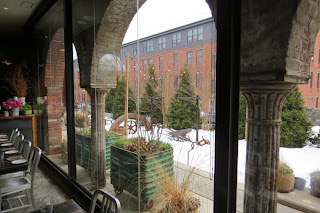
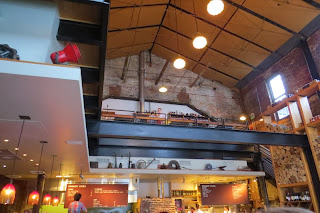
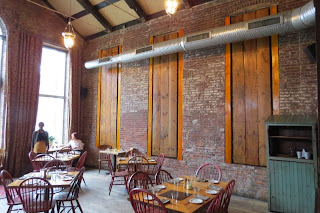
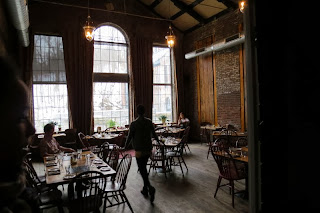
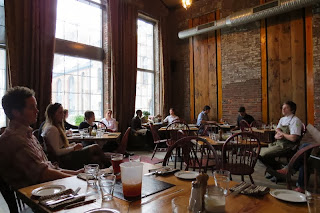
The building has served as an old flour mill, a cotton cloth manufacturer and a steel works mill. A fire diminished the entire area in 1996, the old mills were then turned into residences and shops. Woodberry Kitchen is located in one of these building. The whole front wall as you can see is glass with huge stone pillars and arches. The main restaurant is in a large room with a loft that allows for seating upstairs as well. There is an additional dining room that can be used for large parties or events as well as regular service.   The building still has all the rustic charm  I imagined it had as a mill. The people at Woodberry Kitchen have done an amazing job transforming this old mill into a rustic charming restaurant.


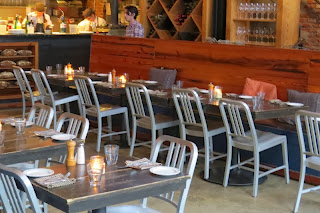
Below is a photo of the separate dining room; note the big banquet tables built into the wall.  These can be pulled down if there is a need to host large numbers of people.  The restaurant's philosophy carries into their furnishing, much of which is reclaimed from local thrift or warehouse sales. 


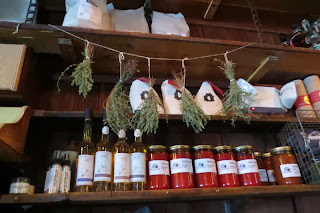
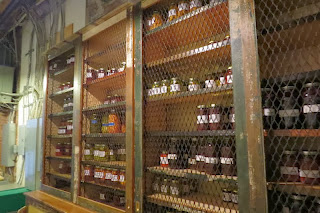
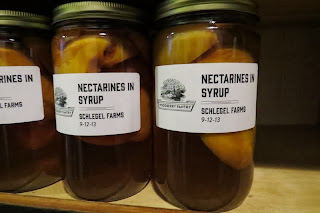
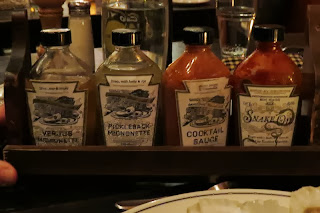
They open the restaurant for dinner at 5:00 but are working and setting up hours before hand. I arrived at the restaurant and 4:15. Amanda Nord, the manager who I had corresponded with earlier greeted me and my mom and welcomed us into the restaurant. At Woodberry kitchen they preserve and can all of their own food. They buy loads of fresh and local fruit and vegetables in the summer, work endless hours to preserve these and then use them in the winter when it is impossible to get many specific fruits and vegetables locally. Amanda told us that recently they had cheesecake with peaches on their menu in the middle of winter. These peaches come from a farm about 10 miles away-and provide a taste of summer during the cold months.  They stored all the canned goods on large, old shelves covered in chicken wire along a hallway leading to the kitchen. Not only did they can fruits and vegetables but they also make all their own sauces, hot sauces and jellies.


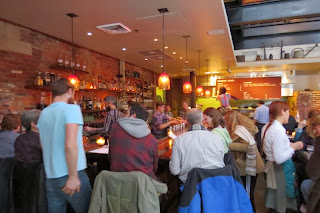
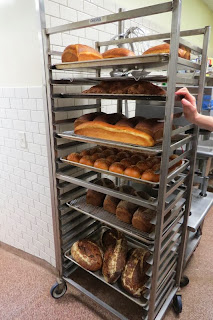
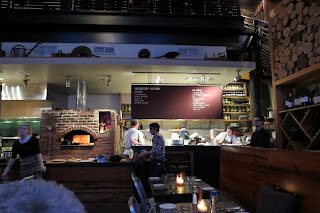
Amanda gave me a tour of the kitchen during the dinner preparation hours. People were rushing around and trying to get everything ready. Potato chips were being fried in the fryers and the bartenders were getting ready.  The bar was stocked with homemade and local ciders as well as many homemade bitters.  As we headed into the kitchen we had to push around all the people, it is impressive how much they accomplish in this relatively small space. They had big tubs of food "in process" including fish sauce and other sauces. Sauerkraut was fermenting and bread was being pushed around on big metal carts-all made there.  As we moved through the kitchen I realized how committed everybody was to the process. People were talking to each other about the food they were cooking and the preparations that still needed to be made. Everyone there was so passionate about Woodberry Kitchen's mission.
                                                 

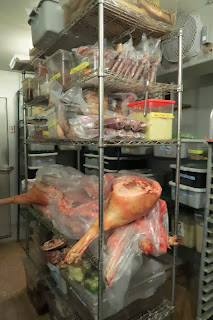
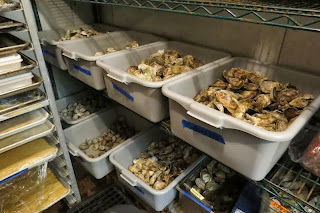
After Amanda lead us through the kitchen we entered the meat room. They had whole legs of meat and boxes and boxes of oysters, I am vegetarian and to most vegetarian this would be nauseating, to me it was not. All the meat at Woodberry kitchen was raised by trust worthy local farmers and had a good life. None of it was raised at Feed Lots. I knew looking at that meat that it had a good life and benefited the pasture around it and the animals to come.


At 4:20 they had a meeting they called the menu meeting. Because they plan their menu around what ingredients they have available they have the meeting daily. All the staff including the waiters, chefs, bar staff, host and manager gathered in the big room with the fold down tables. They came in drinking tea and water from ball jars and big jugs with straws. They were all in their work uniforms and looked ready to get the night going.  I felt like I was in a top secret and exciting meeting.


The point of this meeting was to gather before the night began and make sure everybody was on the same page about what was going on. They went through each section on the menu and talked about any changes they needed to make according to what was being served that night.The waiters would ask any questions they had about the food so they could answer any questions a customer might have. What really struck me was everyone was present including the wait staff who cared so deeply and were fully engaged in this conversation. One chef was talking about a change in the menu and how a particular sauce changed the balance of flavor and added contrasting textures. The waiters just nodded their head in agreement. Everyone had tasted the food and agreed. They were all such foodies and so passionate about their work. As they went through all the revised dishes the chefs also asked the waiters if they had received any feedback on the food. This feedback was then taken into account. Everyone's perspective mattered and they all knew what they were talking about.

One very funny story from the meeting: one of the chefs announced that there would be a burger on the menu that evening.  Apparently they had made burgers for their coffee shop called "Artifact Coffee" and they had forgotten to deliver all of them, so a few remained.  This was obviously some kind of joke because very few people liked the idea of "burger Sundays".  In fact, someone corrected the term and said, "burger Sunday" as if this would only be a one time thing.  Although I never tasted their burger I am sure it was amazing. After the meeting they took the revised menu and printed new versions. They wait staff and chefs left the room and they began to seat, cook and serve the many who had already gathered for dinner.


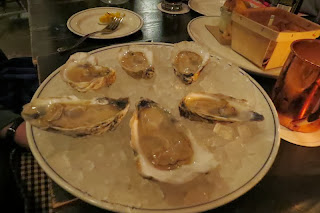
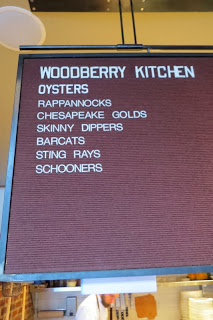
After this meeting we sat down at a table. The tables were beautiful and had candles on each one. I was with my sister, brother, mom and grandmother.  Each item we ordered was amazing. My grandmother, a huge oyster fan had 2 different kinds of oysters, a stingray oyster which was on the sweeter side and the Rappahannock oyster which was known to be saltier. They had a large selection of oysters. The came arranged on a a plate with four homemade sauces, pickles and relishes to put on top. I did not eat them but my grandmother informed me that they were outstanding oysters.  A side note; one of the chefs announced in the menu meeting that it was his last night cooking for Woodberry, he was opening his own oyster bar right down the street.  


We also ate sour cream and onion dip with homemade potato chips. The dip was outstanding and melted in your mouth. Not at all like the Lipton onion soup dip my mom told me about.  The potato chips that I had watched them fry were very crispy and tasted so much better than any store bought, oily, salty potato chip. The dip came in a little container with a sprinkle of mined green onions on top. 

They also brought us baskets of homemade wholewheat and sourdough bread. The bread was outstanding. There menu was long and everything looked delicious. We ended up getting: Rock fish, sausage and sauerkraut, Cabbage salad, deviled eggs and She Crab soup. 
When they brought out the rock fish it was beautifully placed on top of a stack of roasted vegetables. 
The sausage was placed around a pile of sauerkraut and on top was a fried Turkey tail. I never knew that existed-I guess you learn something new everyday! I was amazed at the simple ingredients yet the incredibly complex tastes.

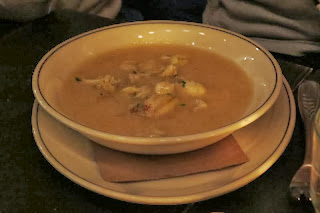
The She crab soup was outstanding. The waiter brought out a bowl that had a mound of crab  in the middle.  He then poured a small pitcher of broth over the crab. There was clearly so much time and energy into making that soup. The broth had such complex flavors, with a hint of heat and was a delight to eat. 

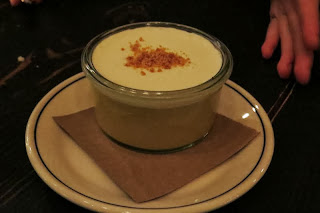
We were all stuffed by the time dessert was offered, but we couldn't resist. We ordered two things: Butterscotch pudding and Coffee Ice cream with a toffee sauce and pecans. As always this was all homemade but with the dessert it was really evident. The butterscotch pudding melted in your mouth. Unlike most puddings it was not overly sweet. The cream on top balanced out the favor and added richness.
 This was the best dessert I think I have ever eaten. The coffee ice cream was also amazing. It was not leaded with sugar but tasted like coffee, with bits of coffee beans throughout. Imagine that coffee ice cream tasting like coffee! It really is not that common, often flavored ice cream is just sweet and not so flavor filled. 

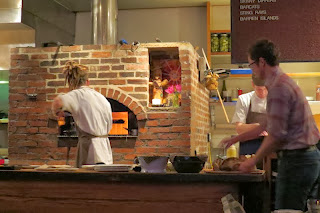
To sum it up the meal we ate at Woodberry Kitchen was outstanding. The whole experience was amazing but more than anything the people were most impressive. Every one I met was passionate about what they did. They were also all extremely kind and knowledgeable. Every time I saw someone they said hi or waved and asked me how I liked what I had seen. They also work incredibly hard. The whole time we were there this one man worked by the fire. He was cooking, searing and baking and never took a break. He obviously poured his heart and soul into his work.  


Finally, the owners of Woodberry have opened two other local food experiences, with one more on the way.  Shoofly Diner is located not far from Woodberry and focuses on well prepared local diner food.  Their website is great fun, check it out:  http://shooflydiner.com/  Artifact coffee is a wonderful coffee shop around the corner from Woodberry.  We enjoyed drinks and treats there early in the day: http://artifactcoffee.com/  Finally, they are opening a butcher shop that also has food and drink in the very near future.  I love the name, "Parts and Labor".  Here is a link to a Baltimore Sun article about this endeavour, http://www.baltimoresun.com/news/maryland/baltimore-city/north-baltimore/ph-ms-parts-and-labor-0123-20140123,0,4527942.story  In this article I find one of my favorite ways to sum up the work at Woodberry kitchen and the mission that the owners Spike and Amy subscribe to; a simple quote from Spike reflecting his mission, "feeding people in way that respects the planet."

I want to thank all the people at Woodberry Kitchen for their willingness to let me into their world for the evening. I was blown away by everything about Woodberry Kitchen. I highly recommend traveling to this special place in Baltimore, you won't be disappointed.